
Brushing Little Teeth: Starting Good Habits Early
Looking after your baby or toddler’s teeth is an important part of their daily routine even before their first tooth appears! From around 6 months, when teeth start to come through, use a soft baby toothbrush and a smear of fluoride toothpaste. Brush twice a day, especially before bed.
Children don’t have the coordination to brush properly by themselves until they're at least 7 years old, so they’ll need your help. Making it fun can help too, try a toothbrushing song or a reward chart to celebrate good habits.
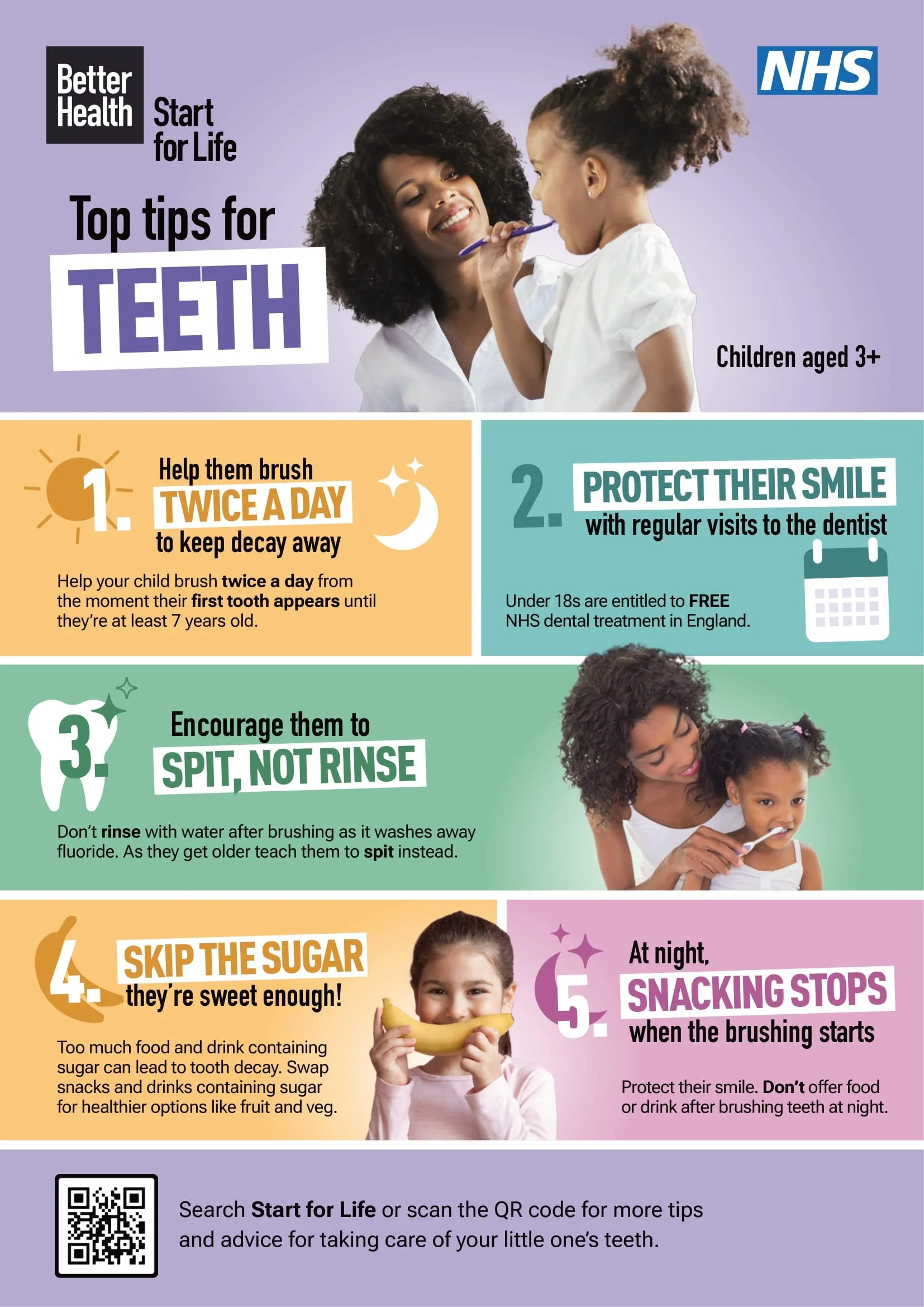
For trusted tips and videos, visit the Start for Life website.
🦷 When to Start
Begin brushing as soon as the first tooth appears (usually around 6 months).
Use a soft-bristled baby toothbrush and a smear of fluoride toothpaste.
🪥 Brushing Routine by Age
0–3 Years
Brush twice a day: once before bed and once at another time.
Use fluoride toothpaste.
Parents/carers should do the brushing.
3–6 Years
Continue brushing twice daily for about 2 minutes.
Use a pea-sized amount of fluoride toothpaste.
Encourage spitting out toothpaste, but don’t rinse - this helps fluoride stay on teeth longer.
7 Years and Up
Children can start brushing on their own, but supervision is still recommended.
Use age appropriate toothpaste with 1,350–1,500 ppm fluoride is recommended.
Brush for 2 minutes, twice a day.
🧼 Extra Tips
Make brushing fun, use a timer, songs, or apps.
Take your child to the dentist when their first teeth come through.
Cut down on sugary snacks and drinks to help prevent tooth decay.
When should I take my child to a dentist?
See a dentist as soon as possible if you think you or your child has tooth decay. Early treatment can help stop it getting worse.
NHS dental care in England is free if you are:
a child under 18, or under 19 and in full-time education
pregnant or have had a baby in the last 12 months
You can also take your child to your own dental appointments so that they get used to the experience. It may help to reduce any fear or worry they may have about visiting the dentist as they grow.