
Forest School
at 1st Place Nurseries
Forest School offers children the chance to spend more time outdoors, moving freely, exploring nature, and building confidence. It supports healthy development, encourages independence, and helps children thrive physically, emotionally, and socially all while having fun in the fresh air.
What do we do at Forest School?
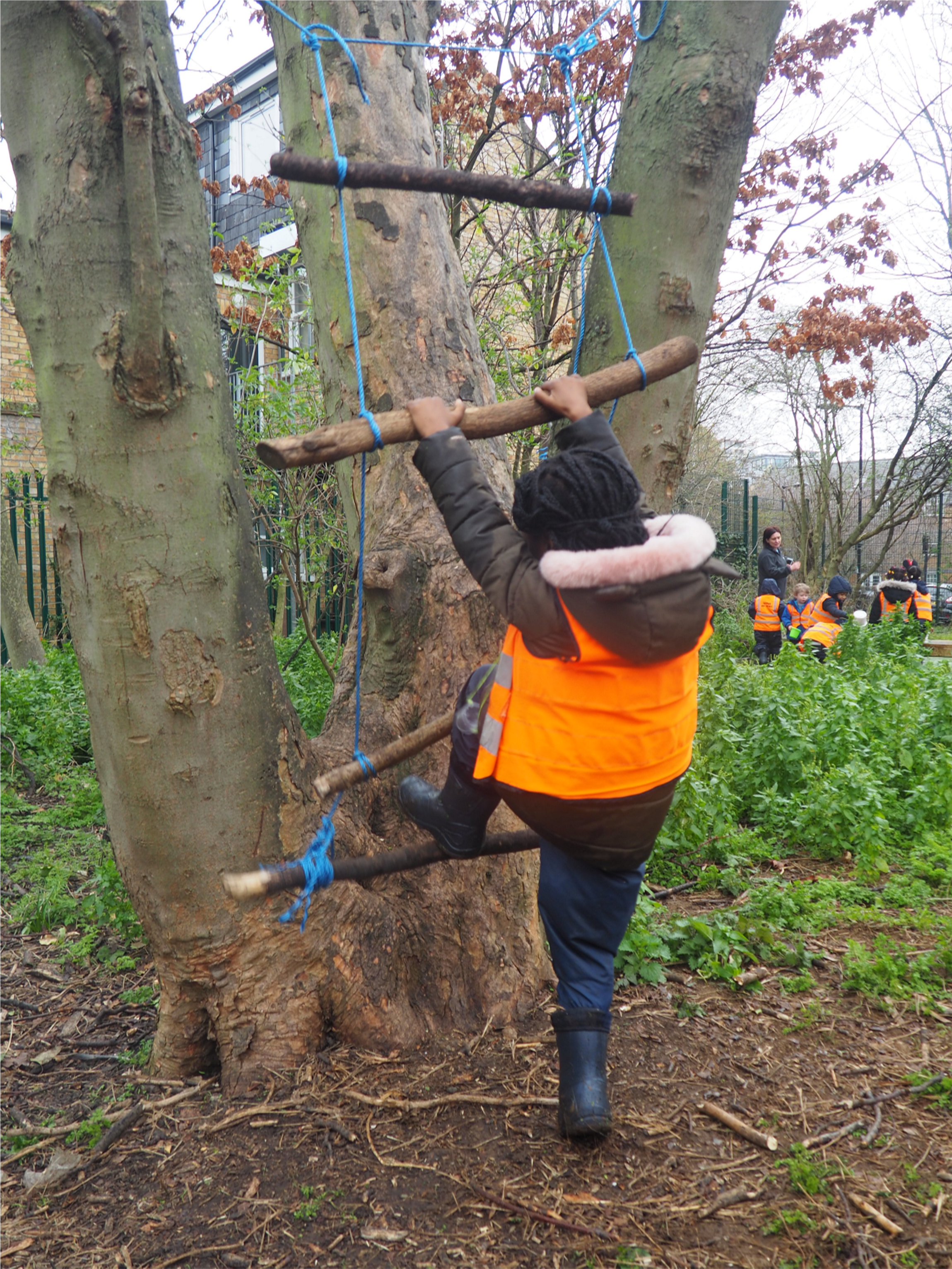
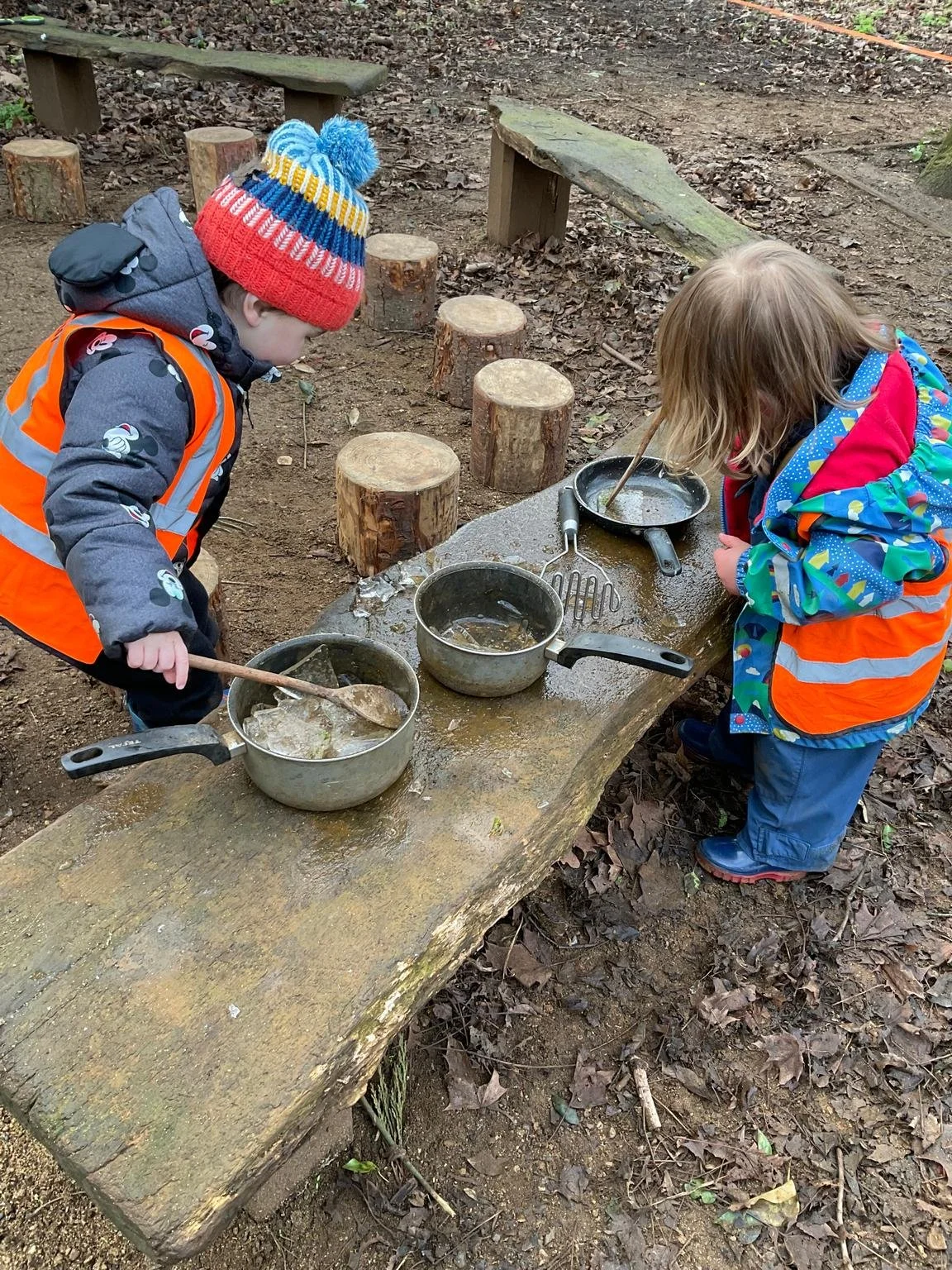
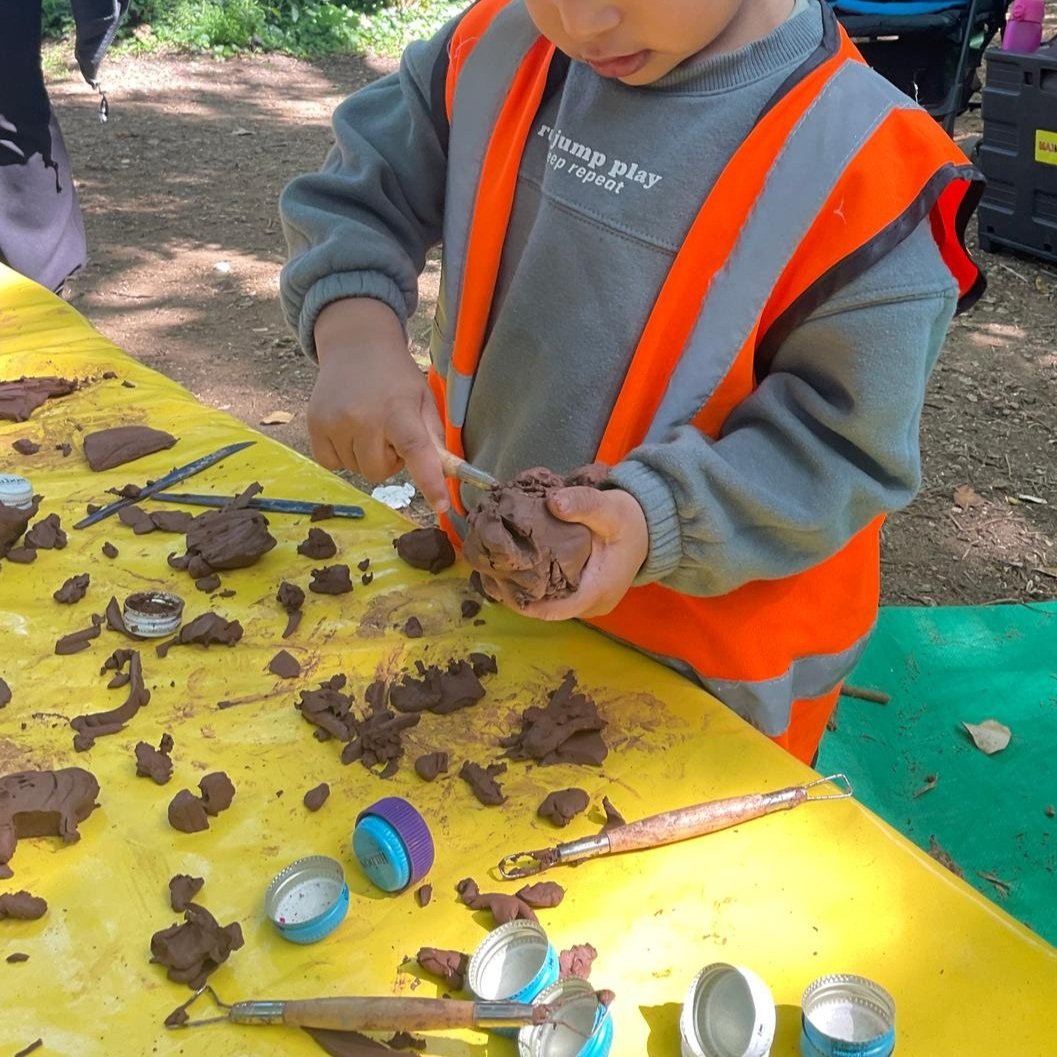
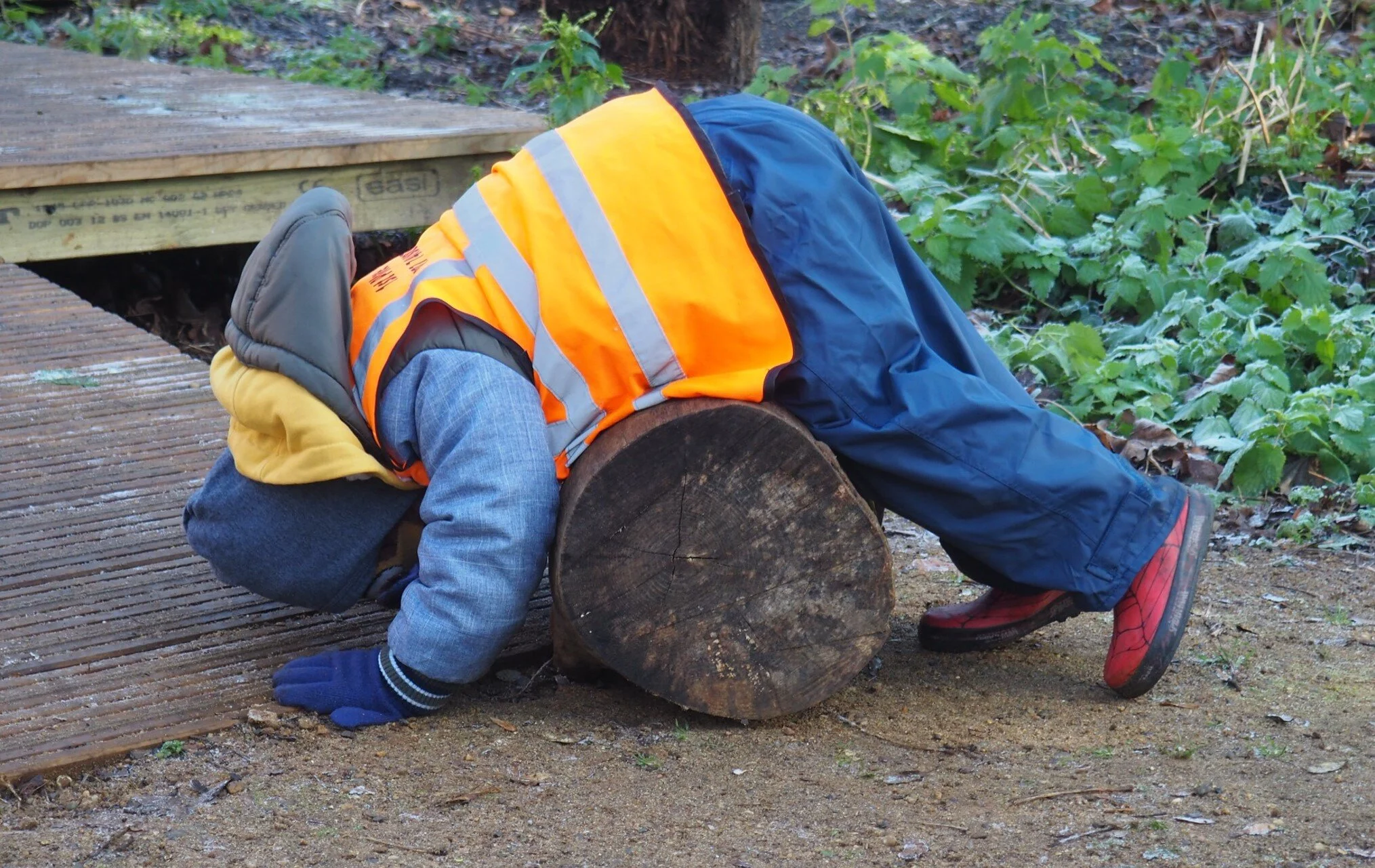
Whilst at Forest School the children will enjoy a range of play and nature based activities. Some activities will be more structured if they involve risk but generally the children’s interests and ideas will direct much of the child-led play and activities that they initiate during the session. Being in a natural environment offers limitless opportunities due to the constantly evolving and shifting seasonal changes. This provides inspiration for many of the creative and imaginative activities, and for this reason every session is a unique experience.
Some of the more structured activities that take place are:
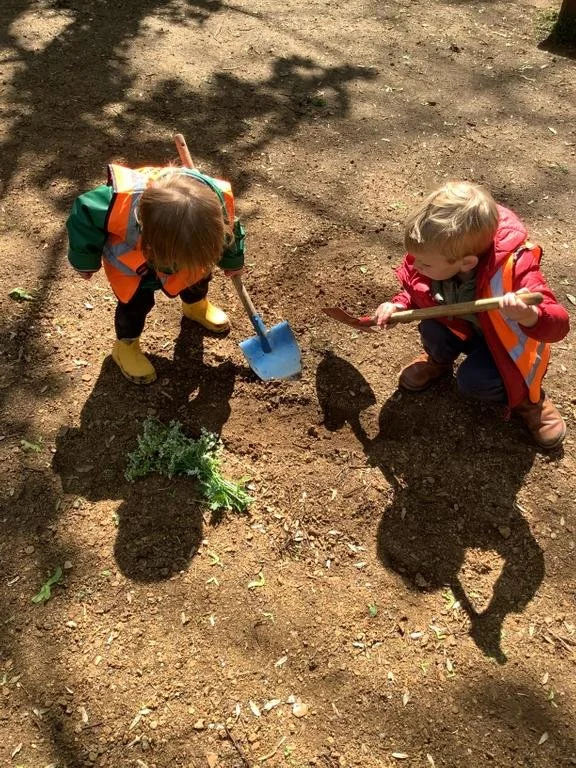
Learning how to use a range of Forest School hand tools
Learning about knots and building tree swings
Natural shelter and den building
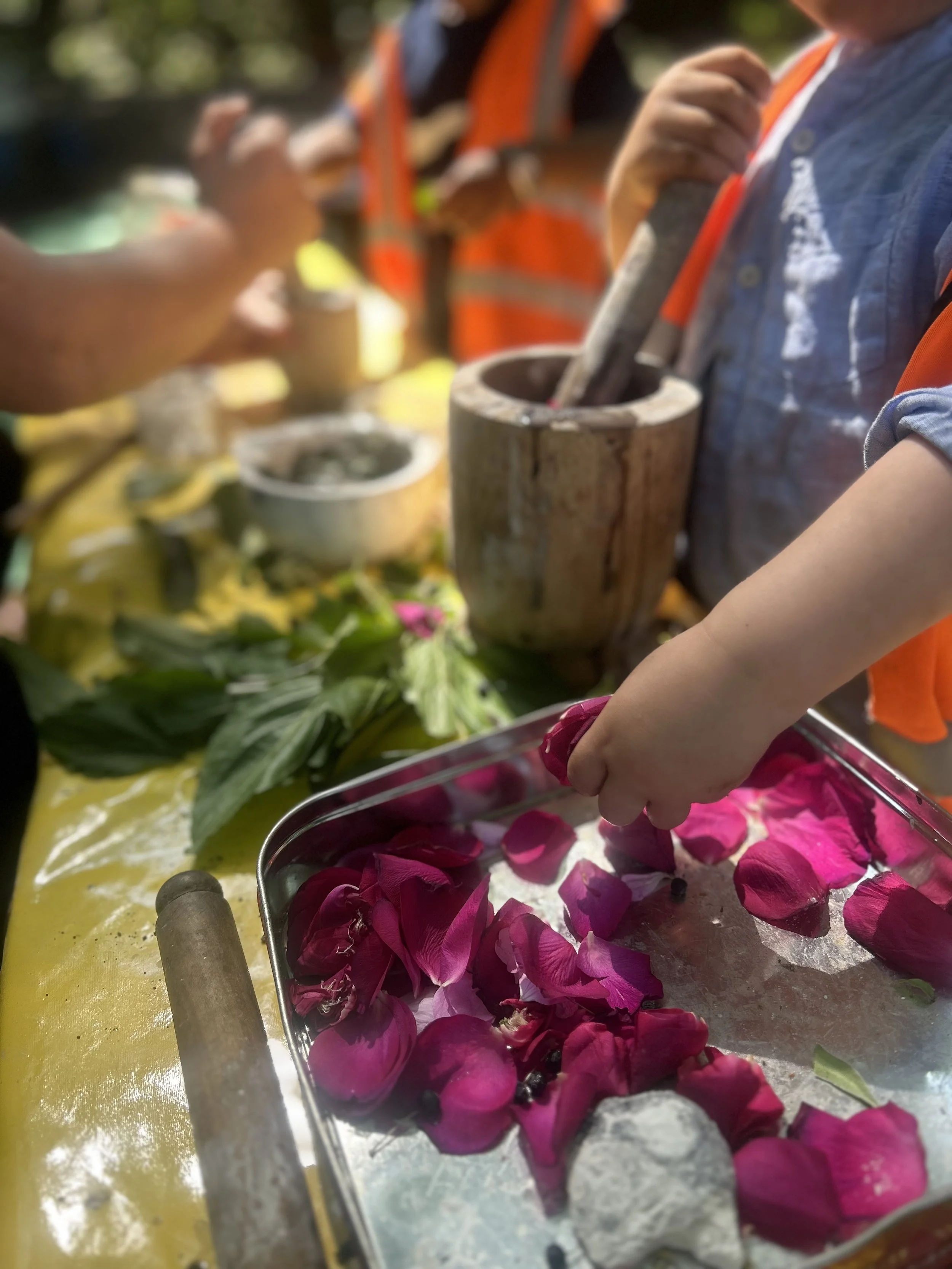
Nature art such as Hapa Zome, natural paint making or weaving
Immersive story telling using foraged items
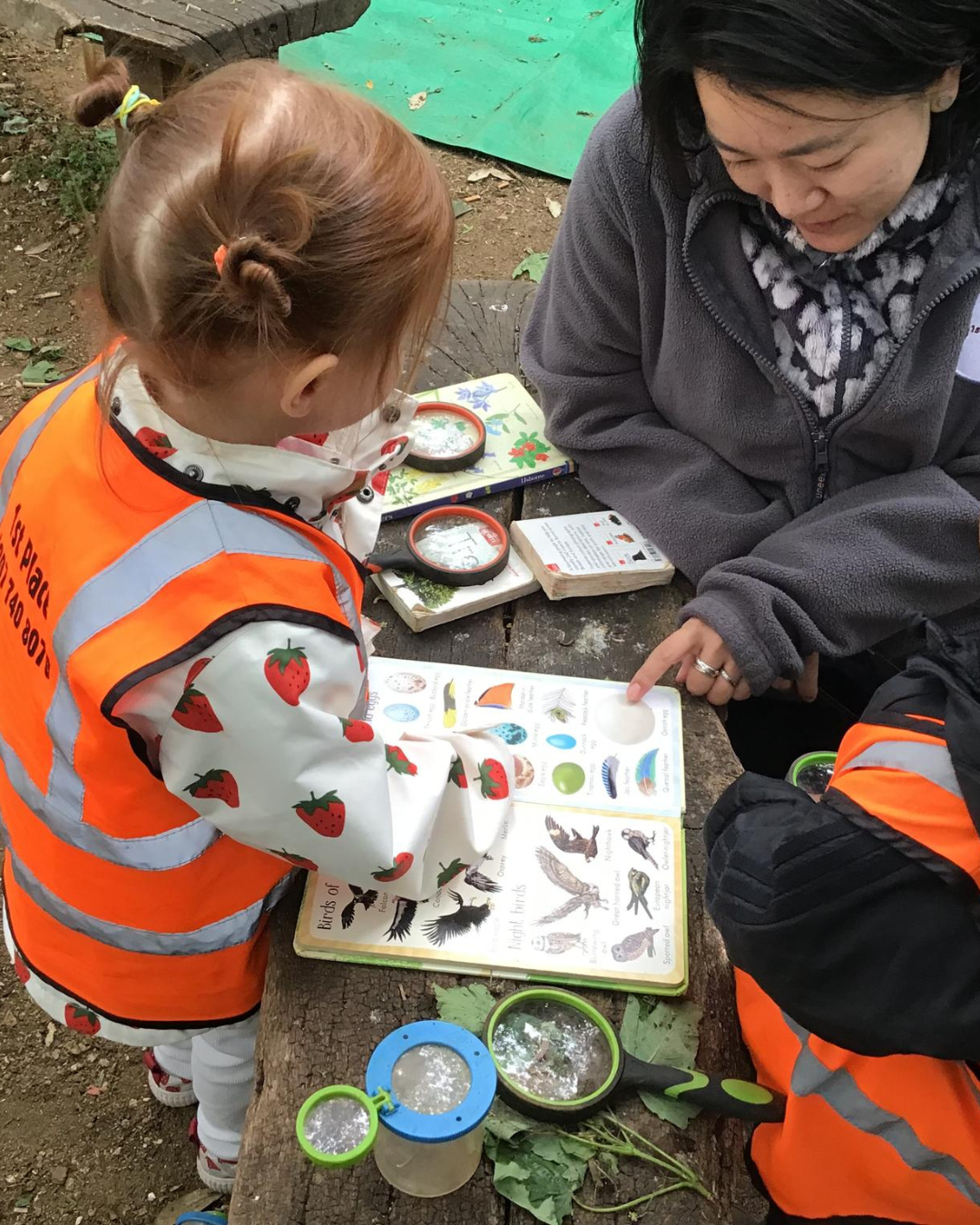
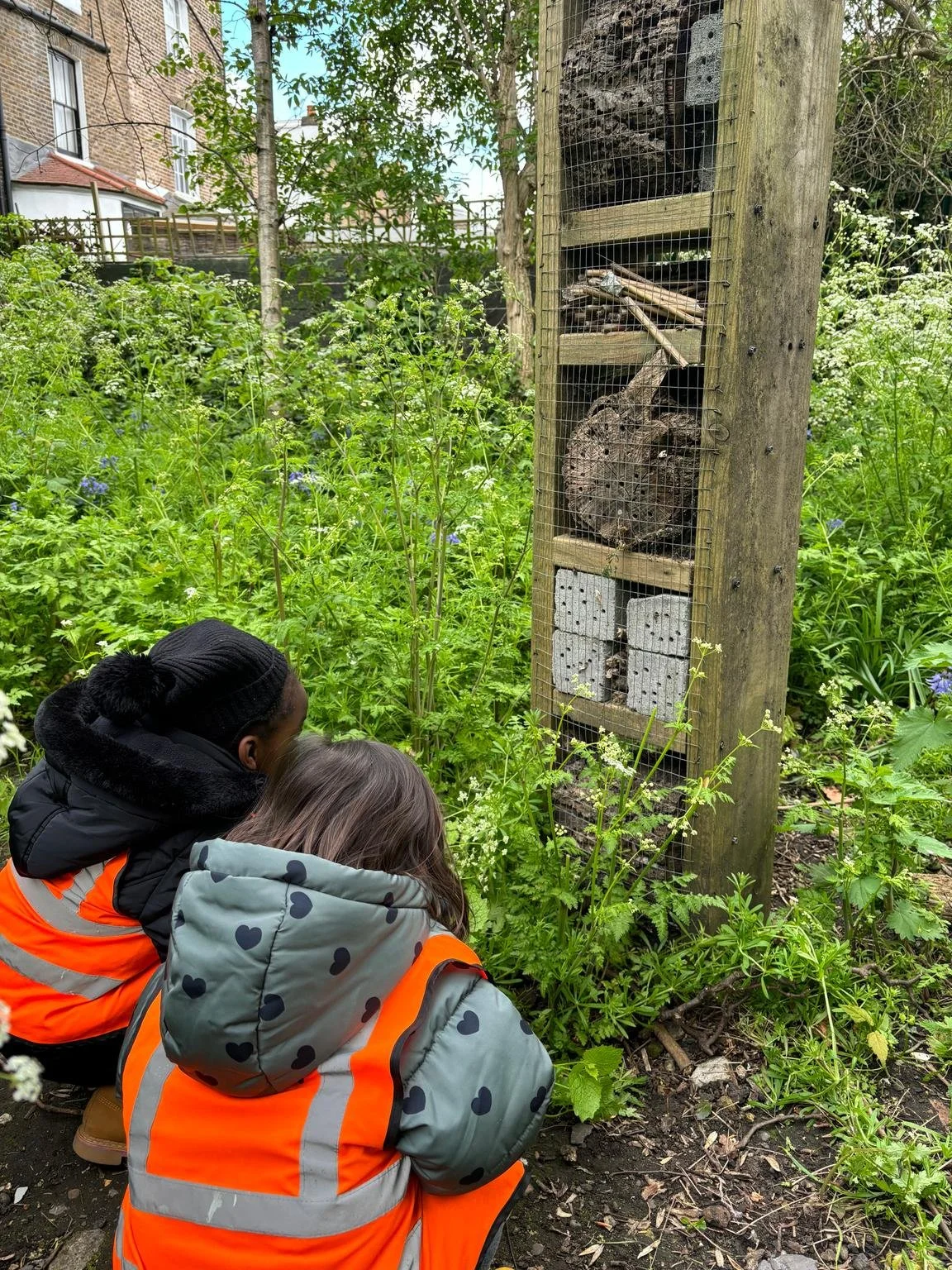
Flora and fauna identification
Team games
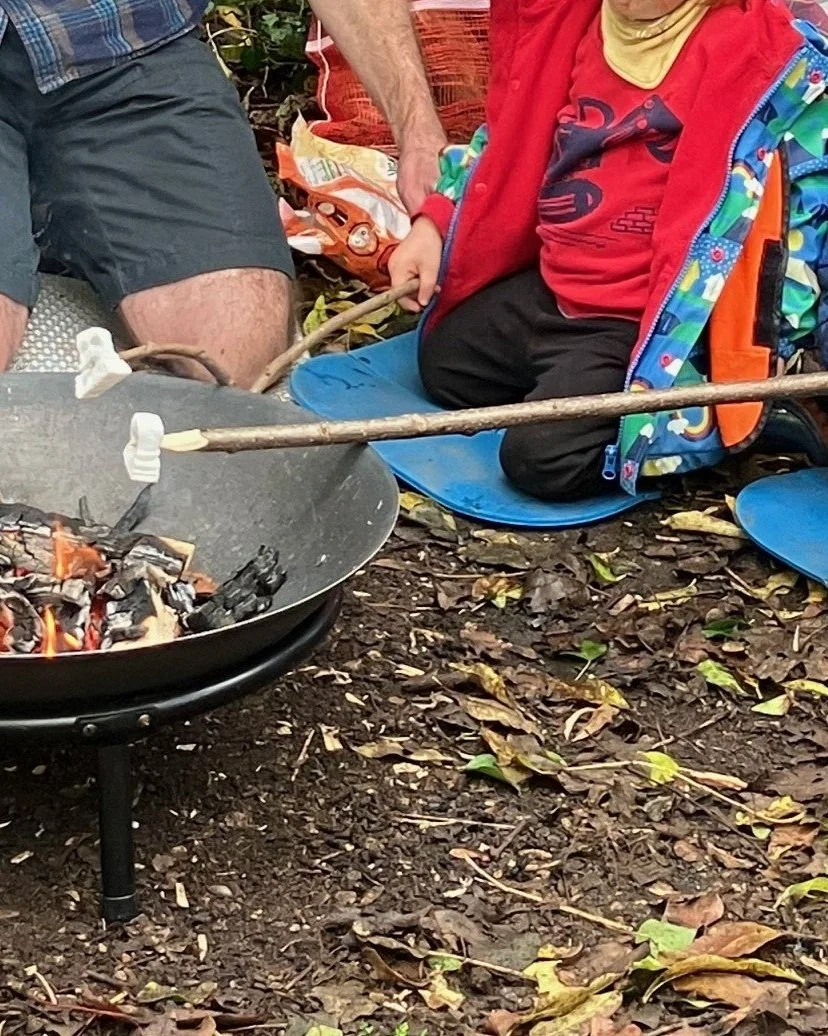
Fire lighting and cooking over an open fire

Where do the sessions take place?
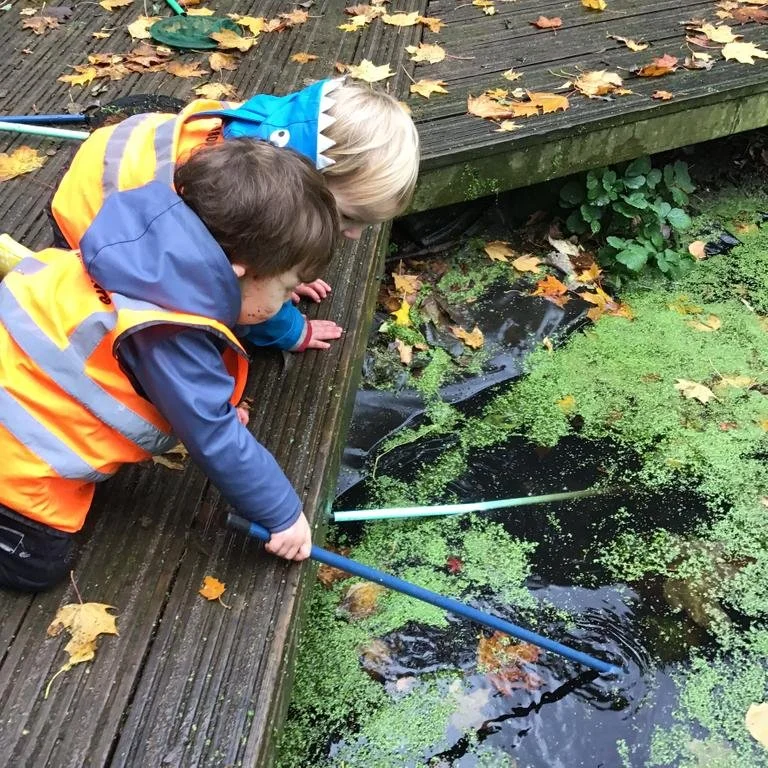
Our Forest School Sessions are held at Cobourg Nature Reserve which is a small woodland area within walking distance of the nursery. The woodland is accessible to the public but in agreement with Southwark Council we have exclusive access during allocated times for our Forest School sessions, these are stated on signage at the entrance to the garden area which are locked whilst our sessions are taking place.
We have created a Woodland Management Plan with the objective of minimising the environmental impact of activities on the site. The long-term vision is to encourage all those involved in the Forest School programme, along with parent volunteers, to be actively involved in the management and enhancement of the setting. For example, tidying up the site on a regular basis and rewilding areas to encourage further growth of native flora to support biodiversity.
The focus of our Forest School is to develop children’s collaborative working, self-esteem, confidence and practical skills, which can then be transferred to the classroom. We strive to make learning practical, fun, so that children develop a positive attitude towards learning. Our aim is to encourage our children to gain and build relationships with staff and peers by providing a long-term process of regular sessions in a natural environment. These sessions are based on informed planning, observations and reflective practice. This enables us to support the children’s progression by scaffolding their learning and the development of a community of learners. Through regular evaluation we develop a programme around the learner’s needs and wishes.
Forest School provides the space and resources to enable the child to become the best person they can be. We are all learners and learn every day, staff included.
Our Forest School programme is a learner-led process of individual development. Everyone is supported to engage in, and with, the natural environment in a way that is suitable for them. It uses child-centred play, exploration, and supported risk-taking to help participants learn to successfully navigate physical, social or emotional challenges through experiential learning.
Ownership of the learning process and gaining a regular sense of achievement helps build self-belief, resilience and confidence that can be applied across different aspects of an individual’s life. Regular time spent in wild spaces is a key aspect of Forest School enabling the children to build meaningful connections to the natural environment, fostering lasting sustainable behaviours and attitudes.
We believe this will support children at 1st Place to develop a deep and lifelong love and respect for the natural environment.
There is no better way to learn about our unique approach to early years education than to take a look around our nurseries.
Book a Tour

Read our feature in the South Londoner ‘Muddy Boots and Curious Minds.’ Find it on page 17.